
 Turkish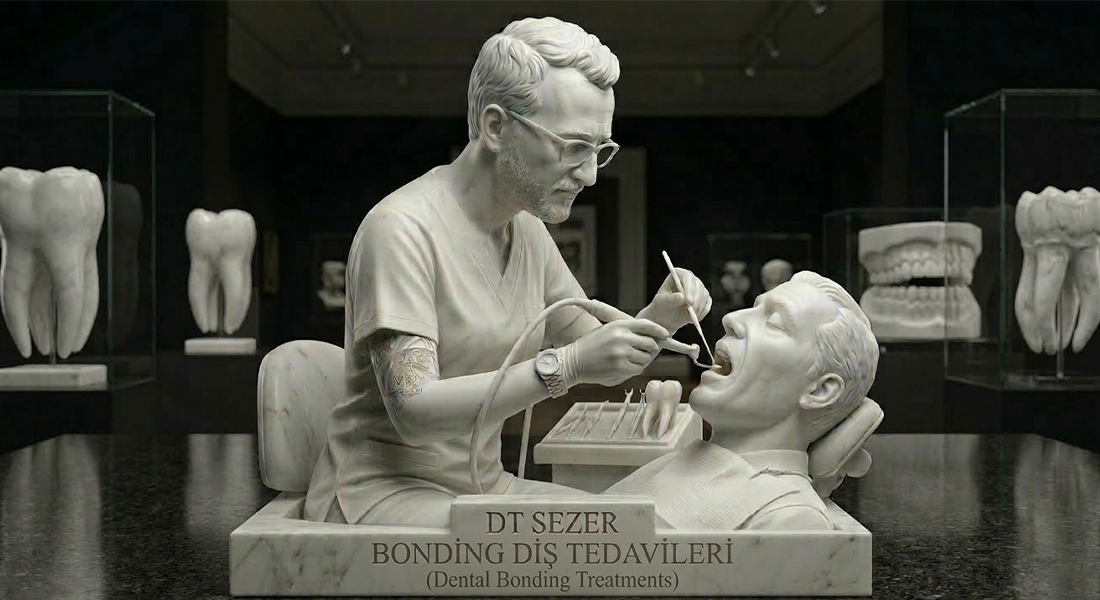
Bonding stands out as the most practical and accessible solution in dentistry’s triangle of speed, aesthetics, and comfort — with the power to transform chipped, discolored, misshapen, or gapped teeth in a single session. Requiring no laboratory wait time, special preparation, or anesthesia, this method is among the best representatives of the minimally invasive dentistry principle: “the best result with the least possible intervention.” Dt. Sezer Özdem delivers natural and long-lasting results to every patient through meticulous attention to color harmony, shape balance, and surface quality in composite bonding procedures.
What Is Dental Bonding?
Dental bonding (also known as composite bonding or tooth bonding) is a minimally invasive aesthetic dentistry procedure based on applying tooth-colored composite resin material directly to the tooth surface, shaping it, and curing it with light. The word “bonding” means “to adhere” or “to attach,” and the name derives from the strong adhesive bonding mechanism by which the composite is fixed to the tooth surface.
The composite resin used in bonding treatment is an advanced-generation restorative material containing inorganic glass or ceramic filler particles within an organic polymer matrix. Produced in a wide range of shades, this material can be shaped through the clinician’s skill and aesthetic judgment to produce results virtually indistinguishable from natural teeth. The curing process, known as polymerization, is completed within seconds using a specialized LED light device.
Dt. Sezer Özdem approaches bonding treatment not as a one-dimensional filling procedure, but as an artistic and technical process in which layering technique, color selection, surface texture, and polishing quality are all managed together. The fact that bonding requires no tooth preparation, impressions, or laboratory phase makes it an extremely advantageous option in terms of both patient comfort and cost.
How Is Dental Bonding Applied?
Bonding is a fast, comfortable procedure that generally does not require anesthesia. Dt. Sezer Özdem meticulously follows the protocol below in every bonding case.
Stage 1 – Evaluation and Planning: Through intraoral examination and digital photography, the current condition of the teeth to be treated, the nature of the aesthetic concern, and the patient’s cosmetic goals are determined. Shade selection is carried out in daylight and with a digital color guide, in harmony with adjacent teeth and lip color. When necessary, a mock-up (intraoral trial application) is performed so the patient can preview the expected outcome in advance.
Stage 2 – Tooth Surface Preparation: In most bonding cases, no shaving or reshaping of the tooth surface is performed — a feature that makes bonding a truly reversible procedure. The surface is cleaned with a prophylaxis paste to remove plaque and superficial stains. In some cases, micro-abrasion or minimal surface correction may be required, though this is extremely rare.
Stage 3 – Acid Etching and Adhesive Application: To ensure strong adhesion of the composite to the tooth, a 37% phosphoric acid gel is applied to the tooth surface and the enamel is etched for 15–30 seconds. The acid is then rinsed off and dried, after which a thin layer of adhesive (bonding agent) is applied and light-cured. This adhesive layer creates a strong micro-mechanical and chemical bond between the composite and the enamel.
Stage 4 – Composite Application and Shaping: The composite resin, selected in the appropriate shade and consistency, is applied to the tooth in layers. Each layer is shaped with specialized instruments to achieve the anatomical form before being cured with an LED light device. At this stage, Dt. Sezer Özdem replicates the tooth’s natural surface topography, incisal edge translucency, and color depth with millimetric precision to achieve the most natural appearance.
Stage 5 – Occlusal Check and Fine-Tuning: Once the composite is fully polymerized, the patient’s bite and occlusion are checked. Necessary occlusal adjustments are made to ensure harmony with opposing teeth. Anatomical contouring and margin adaptation are finalized using fine burs and finishing discs.
Stage 6 – Surface Polishing: This is the critical final step that determines the quality and longevity of the bonding. Using progressively finer polishing discs, rubber finishers, and polishing pastes, the composite surface is brought to a smooth, glossy, and plaque-resistant finish. A well-polished bonding surface both enhances aesthetic quality and extends color stability.
The total time for all these stages is generally 30 to 60 minutes for a single tooth, and between 2 to 4 hours for smile design cases involving multiple teeth. Dt. Sezer Özdem emphasizes that the speed of bonding never means compromising on quality — the same care and attention is applied in every procedure.
Which Teeth Can Bonding Be Applied To?
Composite bonding is a versatile method used for a wide variety of aesthetic and restorative problems. The most common situations in which bonding is applied at Dt. Sezer Özdem’s clinic are as follows:
1 – Chipped and Cracked Teeth
Bonding offers an extremely fast and effective solution for restoring teeth with chipped incisal edges or visible surface cracks resulting from trauma such as falls, impacts, or accidentally biting on hard objects. The composite is shaped to perfectly match the missing fragment, allowing the tooth’s original anatomy to be recreated with great accuracy. Completed in a single session depending on the extent of the chip, this procedure remains the fastest and most comfortable solution especially for anterior incisors with urgent aesthetic needs.
2 – Discoloration and Staining
Discolorations that cannot be fully resolved with teeth whitening can be effectively masked with bonding. Fluorosis stains, fluoride-independent white spot lesions, and surface yellowing are among the types of discoloration where this procedure is used successfully. With the correct combination of opaque and dentin-colored composite layers, underlying discoloration can be completely concealed, and natural depth is added with overlying translucent enamel-colored composite layers.
3 – Diastema (Gap Between Teeth) Closure
Gaps between the upper central incisors (median diastema) or other aesthetic gaps between teeth can be closed with bonding, either as an alternative or a complement to orthodontic treatment. In diastema closure cases, Dt. Sezer Özdem re-establishes tooth proportions in accordance with the golden ratio principle, ensuring that each tooth looks balanced both individually and as a whole. In cases where multiple teeth are widened in relation to one another, symmetry and proportion calculation becomes the most critical technical step.
4 – Shape Irregularities and Small Teeth
Peg-shaped teeth (conically shaped lateral incisors), teeth that are noticeably smaller than normal, and irregular surface contours can all be reshaped to conform to natural tooth anatomy through bonding. In such cases, composite is used to add volume and reshape the surface, bringing the tooth’s size and proportions into balance. Since no tooth tissue needs to be removed, the procedure is both painless and completely reversible.
5 – Tooth Surface Wear
Loss of tooth structure at the incisal edges and tooth surfaces caused by acid erosion, bruxism (teeth grinding/clenching), or abrasive food consumption can be restored with bonding. In these cases, both the lost volume is recovered and the vertical dimension and anterior guidance are re-established. In wear-related bonding cases, controlling the bruxism habit with a night guard is of great importance for the longevity of the restoration — bonding performed without a protective appliance may deteriorate quickly.
6 – Old and Mismatched Fillings
Old composite or amalgam fillings that have discolored over time, developed marginal leakage, or fractured can be renewed with new aesthetic composite bonding. Transitioning from amalgam to composite — especially in anterior regions — is a preferred approach both aesthetically and in terms of biocompatibility.
7 – Exposed Tooth Roots
Root surfaces exposed due to gum recession create discomfort both aesthetically and in terms of sensitivity. Root surface bonding can be applied to reduce sensitivity and cover the exposed area. In this case, bonding serves more as symptomatic support rather than a permanent solution, and treating the underlying periodontal problem remains the primary priority.
Who Is Not Suitable for Dental Bonding?
While bonding is suitable for many patients, certain clinical conditions may require consideration of more appropriate alternatives. Dt. Sezer Özdem transparently discusses these contraindications with patients to guide them toward the correct treatment.
Heavy Occlusal Forces and Bruxism: Individuals with a teeth-grinding (bruxism) habit represent the highest-risk patient group for bonding. The intense chewing forces sustained throughout the night can cause the composite to fracture, wear, and discolor. In these patients, bruxism must be controlled with a night guard before bonding is performed — bonding done without a protective appliance may fail in a short period.
Severe Malocclusion: In cases of advanced malocclusion, crossbite, or pronounced deep overbite, applying bonding may cause occlusal forces to concentrate on the composite. In such cases, a more prudent approach is to first correct the bite through orthodontic treatment, and then plan bonding if needed.
Extensive Decay or Structural Loss: In cases where a large portion of the tooth has been lost due to decay or fracture, bonding’s capacity to provide structural support may be insufficient. In such cases, more comprehensive restorative solutions such as inlays, onlays, or full crowns deliver far more reliable and long-lasting results.
Active Gum Disease: Bonding performed before periodontal treatment is complete may negatively affect gum health. In the presence of gum inflammation, periodontal pockets, or bone loss, periodontal treatment must first be completed before proceeding with bonding.
Insufficient Enamel: Composite bonding relies on the micro-mechanical bond formed between the adhesive system and the enamel. If very little healthy enamel tissue remains due to developmental enamel disorders such as amelogenesis imperfecta or severe acid erosion, the adhesion capacity of bonding is significantly reduced. Alternative restoration options should be considered in such cases.
Severe Intrinsic Staining: Deep intrinsic discolorations — such as tetracycline-related gray-blue staining or advanced fluorosis — may exceed the masking capacity of composite bonding. In such cases, laminate veneers or zirconium crowns offer more reliable and predictable aesthetic outcomes.
Nail Biting and Pen Chewing Habits: These habits generate mechanical forces that wear down and fracture bonding restorations. If the habit persists, the lifespan of bonding will be significantly shorter than expected. Dt. Sezer Özdem inquires about such habits at the beginning of treatment and guides the patient with realistic expectations.
How Long Does Dental Bonding Last?
The lifespan of bonding restorations varies depending on the quality of the application, the materials used, the patient’s habits, and their maintenance routine. Based on the information Dt. Sezer Özdem provides to his patients, the durability of bonding can be assessed as follows:
Average Lifespan
A high-quality bonding application can maintain its function and aesthetics for an average of 5 to 10 years. For anterior restorations, with careful use, good oral hygiene, and regular dental check-ups, this period can extend to 8 to 10 years. For bonding on posterior teeth, the need for renewal may arise more frequently due to intense chewing forces.
Factors That Extend Lifespan
- Brushing twice daily with a soft-bristled toothbrush using proper technique
- Regularly cleaning bonding margins with dental floss or an interdental brush
- Having professional dental cleaning and bonding check-ups every six months
- Avoiding biting hard objects such as crusty bread, nuts, ice, or pens
- Using a night guard if bruxism is present
- Giving up nail-biting habits
- Limiting consumption of coffee, tea, and red wine; rinsing with water afterward
Factors That Shorten Lifespan
- Bruxism and not using a night guard
- Regular consumption of hard and crunchy foods
- Inadequate oral hygiene and irregular dental check-ups
- Heavy smoking, which increases surface staining and roughness
- Excessive consumption of acidic beverages, which can gradually erode the composite surface
Renewal and Maintenance
One of the greatest advantages of bonding is its renewability. In cases of color change, surface wear, or minor chipping, it is possible to apply new composite over the existing one or after removing it. This process is far less costly and far faster compared to renewing a laminate veneer or crown. At check-up appointments, Dt. Sezer Özdem evaluates bonding restorations in terms of margin integrity, color harmony, and surface quality, extending their lifespan through early intervention.
What Are the Advantages of Dental Bonding?
When compared to other aesthetic restoration options in many respects, composite bonding offers distinct advantages. Dt. Sezer Özdem considers bonding to be an extremely valuable clinical tool when applied to the right patient with the right indication.
Completed in a Single Session: The most notable feature of bonding is that it can be completed in a single appointment without the need for impressions, a laboratory phase, or waiting time. The patient comes to the clinic, the treatment is performed, and they leave the same day with their dream smile. This feature represents a major advantage for time-pressed individuals and cases with urgent aesthetic needs.
Minimally Invasive – Tooth Structure Is Preserved: In most bonding applications, no reshaping or shaving of the tooth surface is performed. This makes bonding the least invasive restorative option compared to laminate veneers and crowns. When zero tooth tissue is removed, the treatment is completely reversible — a significant advantage especially for younger patients.
Generally Does Not Require Anesthesia: Since bonding does not involve contact with tooth tissue, local anesthesia is not required in the vast majority of cases. This provides a significant comfort advantage for patients with high dental anxiety, those who are afraid of needles, or those who are bothered by post-anesthetic lip numbness.
Cost Advantage: Compared to laboratory-supported options such as porcelain laminates, Emax, or zirconium crowns, bonding offers a far more accessible cost profile. The expense involved when renewal is needed is also quite limited. This makes bonding a democratic aesthetic solution that appeals to a wide range of patients.
Natural Appearance and Color Harmony: Today’s nanofill and nanohybrid composites are available in dozens of shades and can be matched to the natural tooth color with millimetric precision by the clinician. Using layering techniques and the right color combinations, Dt. Sezer Özdem recreates the tooth’s opacity, translucency, and color depth in perfect harmony with natural teeth.
Easily Repairable: In the event of a minor chip or color deterioration, bonding restorations can be repaired quickly without requiring an extensive procedure. While intraoral repair of ceramic restorations such as porcelain or zirconium is practically very difficult, bonding is a material that can be easily treated chairside.
Reversible Treatment: In cases that involve no tooth preparation, bonding can be removed in the future without causing permanent damage to the tooth. This makes bonding an extremely valuable option, especially for younger patients or as a transitional solution to be tried before committing to a more comprehensive restoration.
Integration with Smile Design: Bonding can be used both as a rapid prototyping tool and as a permanent restoration method within a comprehensive smile design process. Dt. Sezer Özdem positions bonding as a trial tool in the mock-up phase, and as a long-term permanent restoration in suitable cases.
Frequently Asked Questions
1. What is the difference between bonding and laminate veneers?
Both methods are used to improve the aesthetics of anterior teeth, but they differ significantly in terms of material, application method, and clinical performance. Bonding is a method in which tooth-colored composite resin is applied directly to the tooth, completed in a single session, and generally does not require tooth preparation. A laminate veneer, on the other hand, is a type of restoration in which porcelain or Emax shells produced in a laboratory are bonded to the tooth, requiring at least one or two sessions and involving a certain amount of tooth preparation. Porcelain laminates are superior to bonding in terms of color stability, surface smoothness, and longevity; however, bonding is far more advantageous in terms of cost and treatment time. Dt. Sezer Özdem plans the choice between the two individually based on the current condition of the tooth, the patient’s budget, and long-term expectations.
2. How should I protect my teeth after bonding?
Maintaining a few basic habits is sufficient to protect bonded teeth. Brushing at least twice a day with a soft-bristled toothbrush, cleaning bonding margins with dental floss, and having professional dental cleaning every six months are the primary care priorities. Avoiding biting hard foods with bonded teeth, nail biting, and putting hard objects in the mouth greatly reduces the risk of fracture. Rinsing with water after consuming staining beverages such as coffee and tea delays color buildup. If bruxism is present, the use of a night guard is essential. At check-up appointments, Dt. Sezer Özdem assesses the bonding surface and extends its lifespan with minor touch-ups (polishing or small repairs) when needed.
3. Is dental bonding a painful procedure?
No. Composite bonding is a completely painless procedure that in most cases requires no anesthesia whatsoever. During the acid etching stage, a slight tingling or wet sensation may be felt — this is entirely normal and passes within a few seconds. In cases with close proximity to deep dentin, very mild sensitivity may occur; in such instances, minimal anesthesia can be applied. No pain or sensitivity is expected after the procedure. Dt. Sezer Özdem takes all necessary precautions in advance to ensure patients are completely comfortable throughout the bonding process.
4. Will there be color change after bonding?
Composite resin is more susceptible to time-related color change compared to porcelain. Staining agents such as coffee, tea, red wine, and cigarettes can adhere to a roughened or micro-scratched composite surface and gradually cause color darkening over time. In bonding restorations with high polishing quality and maintained surface smoothness, this process slows considerably. Superficial color changes can usually be resolved through professional polishing or light surface renewal. Dt. Sezer Özdem polishes bonding surfaces at periodic check-ups to preserve color freshness for an extended period.
5. How many teeth can be bonded at the same time?
Bonding can be applied in the same session to anywhere from a single tooth to an entire smile arc (typically 6 to 10 teeth). For single-tooth cases, the procedure is completed within 30 to 45 minutes, while a comprehensive smile design bonding covering 6 to 8 teeth may take 3 to 5 hours. In multi-tooth bonding cases, Dt. Sezer Özdem plans the color, shape, and size harmony of all teeth as a whole, evaluating the role of each tooth within the smile arc individually. In complex cases, a mock-up (trial application) performed in advance facilitates previewing the final result and planning any corrections before the session.
A Perfect Smile in a Single Session
Composite bonding is one of the most practical ways to transform your smile with a minimally invasive, fast, and economical method. With meticulous attention to color harmony, shape balance, and surface quality, Dt. Sezer Özdem delivers natural, long-lasting, and aesthetic bonding restorations to every patient in a single session. To learn more about bonding treatment or to schedule an evaluation appointment, you are welcome to contact our clinic.