
 Turkish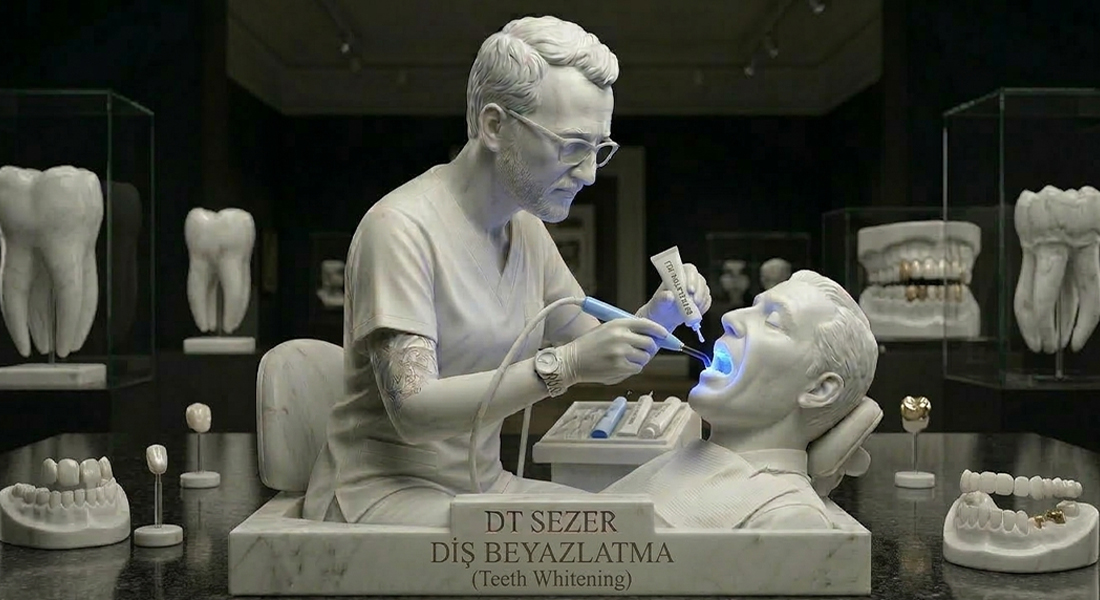
Bright and white teeth have become symbols of confidence, a well-groomed appearance, and a healthy lifestyle. However, due to the inevitable effects of coffee, tea, red wine, smoking, and aging, teeth can discolor over time and cast a shadow over one’s smile. Teeth whitening — one of the most popular and fastest-yielding aesthetic procedures in modern dentistry — restores a bright and vibrant appearance by lightening teeth several shades through a safe, effective, and minimally invasive method. Dt. Sezer Özdem delivers safe and satisfying results to every patient through current protocols and personalized evaluation in teeth whitening procedures.
What Is Teeth Whitening?
Teeth whitening (bleaching) is a cosmetic dentistry procedure that breaks down internal and external pigments accumulated in the enamel and dentin layers of the teeth through oxidative chemical agents, lightening the natural tooth color by several shades. The most commonly used active agents for this procedure are hydrogen peroxide (H₂O₂) and carbamide peroxide (CO(NH₂)₂·H₂O₂). These substances penetrate the enamel through the dentinal tubules and reach the dentin layer, initiating an oxidative reaction that breaks down the organic discoloration molecules (chromophore groups) within.
Teeth whitening does not merely mean surface cleaning of the teeth. Unlike prophylaxis (dental cleaning), which removes surface stains, whitening targets the pigmentation within the internal structure of the tooth, achieving true color lightening. In this way, striking aesthetic results can be obtained without removing any tooth tissue, through a completely reversible and safe method.
Dt. Sezer Özdem views teeth whitening not merely as an aesthetic intervention, but as a meaningful investment in the patient’s smile and self-confidence. At the same time, he openly shares with every patient that whitening affects only natural teeth and does not change the color of artificial restorations such as porcelain, zirconia, or composite fillings. Since whitening performed before restoration planning allows the reference shade of all restorations to be correctly determined, Dt. Sezer Özdem typically applies whitening as the first step in the smile design process.
What Are the Teeth Whitening Methods?
Teeth whitening can be performed using different methods depending on the application setting, the concentration of the agent used, and the duration of the procedure. Dt. Sezer Özdem evaluates each patient’s type of discoloration, sensitivity level, and aesthetic goals to individually recommend the most appropriate method.
1 – In-Office (Clinical) Teeth Whitening
In this method, applied in a dental clinic under professional supervision, a high-concentration hydrogen peroxide gel (25–40%) is applied to the teeth and activated with an LED, laser, or plasma arc light source. The gums and soft tissues are protected with a special barrier or rubber dam. Completed in a single session — typically consisting of three or four fifteen-minute application cycles — the procedure takes a total of 45 to 60 minutes and results in a noticeable shade improvement by the end.
The greatest advantage of in-office whitening is the ability to achieve a much faster and more pronounced result in a single session. Since it is performed in a professional setting, the level of safety and predictability of the outcome is at its highest. Dt. Sezer Özdem uses only safety-certified, clinically proven products in in-office whitening procedures.
2 – At-Home (Home Bleaching) Teeth Whitening
In this method, carried out under the supervision of a dentist, the patient is provided with custom-made thin silicone trays specifically fabricated for their teeth, along with a prescribed low-concentration carbamide peroxide gel (10–22%). The patient applies these trays for a set number of hours per day (2–4 hours during the day or 6–8 hours at night). A gradual shade improvement is achieved over the course of several weeks.
The advantage of at-home whitening is that it provides a more stable color lightening over time with less sensitivity. The low agent concentration minimizes the risk of tooth sensitivity, while guided use enhances safety. The precise custom fabrication of the trays through accurate impressions is critically important for even distribution of the agent and prevention of soft tissue contact.
3 – Combined (In-Office + At-Home) Whitening
Adopted by many clinicians as the most effective protocol, this method reinforces the rapid initial color improvement achieved during the clinical session with at-home whitening over several weeks. The combined method provides noticeably greater color improvement than either in-office or at-home whitening alone, while allowing stable and long-lasting results to be obtained. Dt. Sezer Özdem primarily recommends the combined protocol to patients with heavy discoloration and those aiming for long-lasting results.
4 – Internal Whitening (Walking Bleach / Internal Bleaching)
This is a specialized whitening technique applied to teeth that have undergone root canal treatment and have darkened from within due to blood pigments that have seeped into the pulp chamber. Access is gained through the root canal and sodium perborate or hydrogen peroxide gel is placed inside; the tooth is then temporarily sealed for a few days. The slow release of free oxygen from the agent within the tooth effectively lightens the dark pigments in the dentin layer. This procedure can be repeated several times until a satisfactory result is achieved. In cases of anterior tooth discoloration, Dt. Sezer Özdem evaluates internal whitening alongside alternatives such as Emax or zirconia veneers, aiming to offer the patient the most minimally invasive solution.
5 – Whitening Strips and Over-the-Counter Products
Whitening strips, gels, and toothpastes sold in pharmacies and cosmetic stores are consumer products containing low-concentration peroxide. While their ease of use may seem advantageous, using them without dental supervision can carry risks such as uneven agent distribution, soft tissue irritation, and insufficient results. Dt. Sezer Özdem strongly recommends a dental evaluation before using such products.
How Is Teeth Whitening Performed?
Teeth whitening is not a cosmetic procedure that can be applied arbitrarily — it is a medical aesthetic application requiring preliminary evaluation and individualized planning. Dt. Sezer Özdem follows the protocol below in all whitening cases.
Stage 1 – Preliminary Evaluation and Selection Criteria: Conditions such as active decay, gum disease, and exposed tooth roots are assessed through intraoral examination and X-rays when necessary. If such problems are present, they must be treated first before proceeding with whitening. The type of discoloration (surface or intrinsic?), its degree, the initial shade, and the cause of discoloration are also determined at this stage.
Stage 2 – Shade Assessment: Before whitening, the initial tooth color is recorded using a VITA shade guide or digital shade-measurement device. This record is important for objectively measuring and documenting the effectiveness of the treatment.
Stage 3 – Professional Dental Cleaning: Before beginning the whitening procedure, prophylaxis (professional cleaning) is performed to remove tartar and surface stains. A clean tooth surface allows the whitening agent to penetrate more homogeneously and effectively.
Stage 4 – In-Office Application (Clinical Session): The gums and lips are isolated with a rubber dam or gingival barrier. High-concentration whitening gel is applied to the teeth and activated with LED or laser light. Typically 3–4 cycles are applied (each lasting 15 minutes). At the end of the session, the tooth shade is re-measured and the degree of lightening is documented.
Stage 5 – At-Home Tray Fabrication (In Combined Protocol): A custom-fit silicone tray is fabricated from an impression of the patient’s teeth. The patient is provided with low-concentration carbamide peroxide gel and usage instructions. The progress of treatment is monitored through check-up appointments during the several-week at-home application process.
Stage 6 – Outcome Evaluation and Maintenance Recommendations: Once whitening is complete, the achieved shade is recorded and the patient is informed with dietary, behavioral, and care recommendations to preserve the result. Touch-up sessions can be planned as needed.
In Which Conditions Is Teeth Whitening Used?
While teeth whitening is defined more as an aesthetic application than a disease treatment, it is an effective solution used in many different clinical conditions causing discoloration. Dt. Sezer Özdem always transparently shares with patients which types of discoloration whitening will address and in which situations different approaches may be needed.
Extrinsic Discoloration: Surface stains left by substances such as coffee, tea, red wine, and cigarettes that accumulate on the tooth surface can be effectively removed both through professional dental cleaning and whitening. Whitening has the highest success rate for extrinsic discolorations.
Intrinsic Discoloration: In this type of discoloration, which forms within the dentin layer or inside the enamel, whitening has a deeper effect. Age-related physiological yellowing of the teeth, the increasing visibility of the yellow color of dentin as enamel thins, and discolorations caused by blood pigments that have seeped into the pulp chamber are all evaluated in this category.
Age-Related Yellowing: As age advances, the enamel layer thins and the yellow-orange color of the underlying dentin becomes more visible from the outside. This physiological yellowing can be largely resolved with teeth whitening, restoring a youthful appearance to the teeth.
Post-Root Canal Discoloration: In teeth that have lost their pulp and darkened from within over time, the walking bleach (internal whitening) method effectively breaks down pigments that cannot be reached by external whitening.
Mild Fluorosis Stains: White or brown spots that form in the enamel due to excessive fluoride intake during the developmental period can be partially improved with whitening, depending on the severity of the fluorosis. In severe fluorosis cases, additional methods such as micro-abrasion or laminate veneers may be required.
However, there are also some types of discoloration for which whitening is not effective. Dt. Sezer Özdem clearly informs patients that whitening alone may be insufficient in cases such as deep gray-blue tetracycline-related discoloration, advanced fluorosis, or enamel developmental defects (amelogenesis imperfecta); in such cases, restorative alternatives such as Emax laminates or zirconia veneers may be considered.
What Are the Side Effects of Teeth Whitening?
Teeth whitening performed under professional supervision is a safe and approved procedure. However, some temporary side effects may occur. Dt. Sezer Özdem comprehensively informs patients about possible side effects before the session, alleviates concerns, and takes measures to minimize risks.
Tooth Sensitivity: This is the most commonly observed side effect of whitening. When the whitening agent passes through the enamel tubules and reaches the dentin, temporary sensitivity to hot, cold, or sweet stimuli may develop. This sensitivity typically resolves on its own within 24 to 72 hours after the procedure. Factors that increase sensitivity include high agent concentration, long application duration, and pre-existing dentin sensitivity. Dt. Sezer Özdem may apply fluoride varnish or a desensitizing gel before the session to reduce the risk of sensitivity.
Gum Irritation: Contact of high-concentration whitening gel with the gums can cause temporary redness, sensitivity, or whitening of the tissue. This can largely be prevented with correct application of the rubber dam and gingival barrier. In at-home applications, correct tray design and avoiding overfilling of the gel are also critically important for minimizing gum contact.
Temporary Shade Changes: Immediately after whitening, teeth may appear whiter or more chalky than normal; this settles within a few days through a “rebound” effect related to carbon dioxide loss, reaching the final shade.
Color Mismatch with Existing Restorations: While whitening affects natural teeth, it does not change the color of porcelain, zirconia, or composite restorations. As a result, existing restorations may lose color harmony with the surrounding teeth after whitening. Dt. Sezer Özdem discusses this issue with patients in advance and plans any restoration renewal to take place after whitening when necessary.
Enamel Damage from Overuse: Uncontrolled and excessively frequent whitening performed outside of professional supervision can lead to superficial demineralization of the enamel layer. This risk is extremely low when protocols determined under physician supervision are followed. Dt. Sezer Özdem never exceeds safe dosage and frequency limits in any application.
What Should Be Done After Teeth Whitening?
The recommendations for the first few days are of great importance for prolonging the longevity of the whitening result and minimizing side effects. Dt. Sezer Özdem provides all patients with the following comprehensive care protocol.
First 48 Hours – White Diet: Immediately after whitening, the pores of the teeth are open, making this the highest-risk period for color uptake — avoiding dark-colored foods and beverages is critical. Coffee, tea, red wine, cola, dark fruit juices, tomato sauce, mustard, soy sauce, and cigarettes must be strictly avoided during this period. Consuming only white or light-colored foods is recommended (such as chicken, fish, rice, milk, yogurt, white cheese, water, and apples).
Managing Sensitivity: If post-procedure sensitivity occurs, desensitizing toothpastes containing potassium nitrate or stannous fluoride can be used. Very hot, very cold, or very acidic beverages should be temporarily avoided. If a painkiller is needed, ibuprofen is preferred; however, it should be kept in mind that blood-thinning medications such as aspirin can increase gum bleeding.
Maintaining Oral Hygiene: Brushing twice a day and daily flossing should be continued after whitening. Special toothpastes containing whitening agents can be considered as a supportive option to help preserve the result. However, due to their abrasive content, it is safer to use these toothpastes only once a day.
Touch-Up Sessions: To preserve the shade improvement for a longer period, Dt. Sezer Özdem recommends short touch-up sessions once or twice a year. These brief sessions require far less time and agent compared to the initial whitening.
Reducing Staining Habits: Drinking coffee and tea through a straw, reducing or quitting smoking, and limiting the consumption of acidic beverages are the most effective behavioral changes that directly extend the longevity of the whitening result.
Is Teeth Whitening Painful?
This is one of the most frequently asked questions about teeth whitening. The short answer is: no, teeth whitening is not a painful procedure. However, some patients may experience temporary sensitivity during or after the procedure.
During in-office whitening, most patients complete the procedure without feeling any pain or discomfort. Occasionally, a mild warming or tingling sensation in the teeth may be felt during the session — this is normal and passes shortly after the trays are removed. However, if pre-existing dentin sensitivity or exposed tooth roots are present, more pronounced sensitivity may be experienced during the procedure.
Post-procedure sensitivity is a more commonly encountered situation. This sensitivity to hot, cold, or sweet stimuli — which resolves within 24 to 72 hours — is described not as pain, but as a brief sensation. Post-whitening sensitivity is not inevitable for all patients, and many patients complete the process without experiencing any discomfort.
To minimize the risk of sensitivity, Dt. Sezer Özdem may apply fluoride varnish or a desensitizing gel before the session, opt for a lower-concentration agent, or adjust the session duration according to sensitivity. Additionally, for patients with high sensitivity, the at-home low-concentration carbamide peroxide protocol causes far less discomfort compared to the in-office type.
Is Teeth Whitening Permanent?
The permanence of teeth whitening varies depending on the method used, the person’s dietary habits, smoking, and individual tooth structure. While a completely permanent result is not possible, it is possible to maintain white teeth for a long time with proper care and touch-up applications.
Average Duration of Effect
The effect of professional in-office whitening lasts an average of 1 to 3 years. In patients who avoid staining agents such as coffee, tea, and cigarettes, maintain good oral hygiene, and have regular professional cleanings, this period can extend to 3 years. With the combined (in-office + at-home) protocol, the duration of effect is noticeably longer compared to in-office treatment alone.
Factors Affecting Longevity
- Frequency and amount of consumption of coffee, tea, red wine, and dark-colored beverages
- Smoking significantly increases the rate of tooth discoloration
- Quality of oral hygiene; regular and correct brushing delays color buildup
- Regular professional dental cleaning (prophylaxis) keeps surface stains under control
- Individual tooth structure; color relapse may be faster in teeth with porous and thin enamel
- The aging process; the thinning of the enamel layer over time increases the tendency to yellowing
Touch-Up Applications
The most effective way to maintain the results of teeth whitening for many years is through short touch-up sessions once or twice a year. These sessions require far less agent and time compared to the initial whitening. Dt. Sezer Özdem creates an individualized touch-up schedule for each patient, aiming to preserve the brightness of the smile in the long term.
In conclusion, teeth whitening is not a one-time permanent procedure, but a dynamic aesthetic process that requires regular maintenance and touch-ups. Patients who know this from the outset and adjust their behavior accordingly can maintain a bright and vibrant smile for years to come.
Frequently Asked Questions
1. Can teeth whitening be applied to every tooth?
Teeth whitening only takes effect on natural tooth enamel. It has no whitening effect on porcelain, zirconia, or composite restorations. For this reason, a comprehensive evaluation is essential before whitening for patients who have such restorations in their mouth. Patients with active tooth decay, large fillings, exposed tooth roots, or advanced periodontal problems must have their existing issues treated first before proceeding with whitening. Dt. Sezer Özdem individually assesses the suitability of each patient before the session.
2. Can teeth whitening be done during pregnancy?
Teeth whitening is not recommended during pregnancy or breastfeeding. There is insufficient safety data on the effects of peroxide-based whitening agents on the fetus or baby during this period. Therefore, as a matter of precaution, whitening should be postponed for the duration of this period. Dt. Sezer Özdem clearly communicates this to pregnant and breastfeeding patients, and the process is planned for an appropriate time after delivery.
3. How many sessions does teeth whitening take to complete?
This varies depending on the method and the intensity of the discoloration. In-office whitening is completed in a single session, generally within 45 to 60 minutes. In the combined protocol, the clinical session is combined with 2 to 4 weeks of at-home application. Internal whitening (walking bleach) may require 1 to 3 sessions, with a waiting period of several days between each session. With at-home whitening, results are achieved with regular use over 2 to 4 weeks depending on the agent concentration. Dt. Sezer Özdem evaluates each patient’s expectations and discoloration profile to determine the most appropriate session plan from the outset.
4. Are over-the-counter whitening products safe?
Whitening strips, gels, and toothpastes sold in pharmacies and cosmetic stores contain low-concentration peroxide and are generally harmless when used according to instructions. However, their effectiveness is quite limited compared to professional clinical applications. Moreover, risks such as gum contact, uneven application, and overuse should not be overlooked. Dt. Sezer Özdem recommends a dental evaluation before turning to over-the-counter products. This way, both suitability and safety are assessed, the most appropriate and most effective method for the individual is determined, and disappointment is prevented.
5. Is teeth whitening suitable for children?
Teeth whitening is generally not recommended for individuals under the age of 18. In children and young adults, the enamel layer has not yet reached full maturity, making them potentially much more sensitive to whitening agents. Additionally, since the pulp chamber is larger in children, the risk of sensitivity is significantly higher than in adults. Dt. Sezer Özdem evaluates whitening requests in adolescent and young patients together with the parent, and in most cases recommends waiting until dental development and enamel maturation are complete.
Bright and White Teeth
Teeth whitening is one of the most effective ways to rejuvenate your smile through a minimally invasive, fast, and safe method. With current whitening protocols, personalized evaluation, and a patient-centered approach, Dt. Sezer Özdem provides every patient with a safe, effective, and long-lasting whitening experience. To learn more about teeth whitening or to schedule an evaluation appointment, you are welcome to contact our clinic.