
 Turkish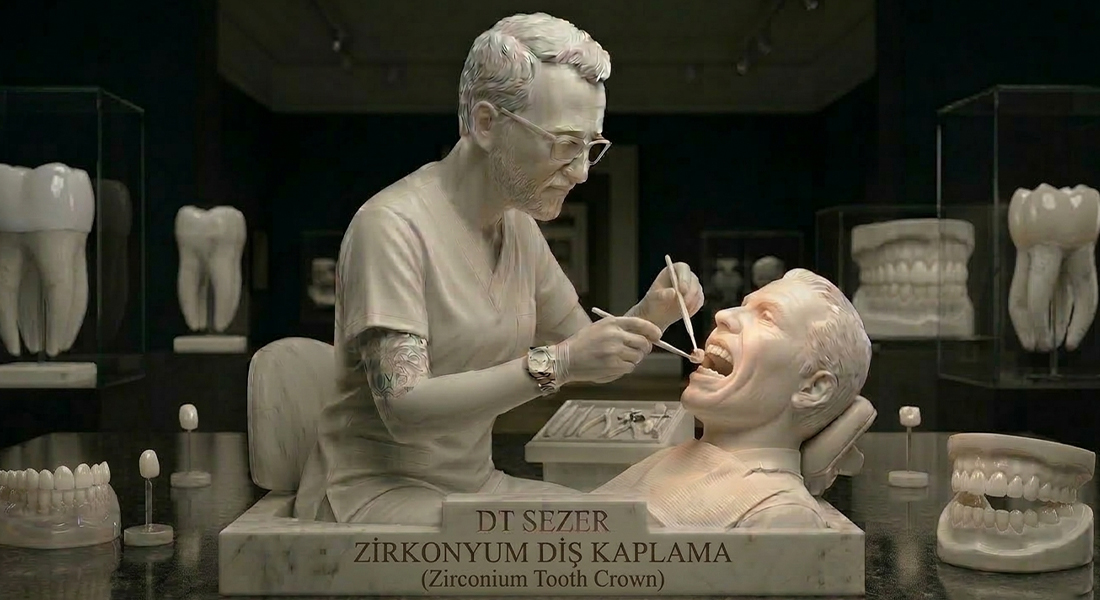
For those seeking a strong, natural-looking, and long-lasting smile, zirconia dental veneers are one of the most advanced and reliable restoration options that modern dentistry has to offer. With its high mechanical strength, metal-free biocompatible structure, and satisfying aesthetic properties, zirconia has become a preferred standard in both anterior and posterior teeth. Dt. Sezer Özdem provides patients with a strong, healthy, and aesthetic oral structure through personalized zirconia veneers designed using CAD/CAM technology and quality laboratory collaboration.
What Is a Zirconia Dental Veneer?
A zirconia dental veneer is a type of all-ceramic dental restoration produced from an extremely hard and durable metallic oxide compound belonging to the ceramic family, known as zirconium dioxide (ZrO₂). Zirconia is not recognized as a foreign substance by the human body; it does not cause allergic reactions, does not corrode, and does not change color over time. With these properties, it maintains its place as a biomedical material safely used in both dentistry and orthopedic surgery.
A zirconia veneer can be applied as a crown (full coverage) that covers the entire visible surface of a damaged, discolored, or misshapen tooth and is permanently bonded to it; it can also be used in the form of a laminate veneer that covers only the front surface of the tooth and requires far less tooth structure removal. The goal is the same in both applications: to restore both the aesthetic appearance and the functional integrity of the tooth to the highest degree.
Dt. Sezer Özdem views zirconia veneers not merely as an aesthetic intervention, but as a comprehensive restorative solution that rebuilds structural integrity, strengthens chewing function, and preserves oral health in the long term. Every detail — from shade selection to marginal fit, from occlusal balance to gingival adaptation — is planned on an individualized basis.
What Are the Properties of Zirconia Dental Veneers?
Zirconia dental veneers possess a number of valuable properties that make them stand out compared to other restoration materials. Dt. Sezer Özdem transparently shares all of these properties with patients to guide them toward an informed treatment choice.
Exceptional Mechanical Strength: Zirconia has the highest fracture toughness among the ceramic materials used in dentistry. With a flexural strength of 900 to 1200 MPa, zirconia demonstrates a mechanical performance far exceeding that of conventional porcelains. This gives it superior resistance to the intense chewing forces encountered in posterior teeth. It also offers a safe option for individuals with bruxism (teeth grinding).
Metal-Free Biocompatible Structure: Although zirconia is not a metallic element, it is sometimes referred to as “ceramic metal” due to its mechanical properties. Unlike porcelain-fused-to-metal (PFM) crowns, zirconia contains no metal substructure whatsoever; this completely eliminates the risk of a metallic gray margin appearance that may emerge over the years as the gum recedes. It is an ideal option for individuals with metal allergies or sensitivities.
Aesthetics Close to Natural Teeth: Traditional zirconia crowns had more limited light transmittance compared to porcelain due to their opaque white color. However, today’s high-translucency (HT) and ultra-translucency (UT) zirconia ceramics can mimic the light transmittance and color depth of a natural tooth much more closely. In particular, multilayer zirconia blocks reflect the color gradient from the cervical area toward the incisal edge in harmony with natural tooth anatomy.
Color Stability and Longevity: Zirconia is far less affected by staining agents such as coffee, tea, red wine, and cigarettes compared to porcelain. Since its surface is non-porous and extremely smooth, plaque adhesion is kept to a minimum and the risk of color change is significantly reduced. This property makes it possible for zirconia veneers to maintain their aesthetic freshness for decades.
Possibility of Minimal Tooth Preparation: The high strength of zirconia — especially in monolithic form — allows it to provide sufficient resistance even in very thin cross-sections. This property makes it possible to remove less tooth structure compared to traditional metal-porcelain crowns, offering an application compatible with minimally invasive dentistry principles.
Low Thermal Conductivity: Unlike metal, zirconia does not conduct — or conducts very little — heat. This property minimizes tooth sensitivity that may develop in response to hot and cold beverages, increasing daily use comfort.
Friendly to Opposing Teeth: Well-polished zirconia surfaces can function together with opposing teeth for many years without damaging their enamel. This property is of great importance for maintaining occlusal balance.
How Is a Zirconia Veneer Applied?
Zirconia veneer treatment is a multi-stage process in which digital planning, precise tooth preparation, and advanced laboratory fabrication are carried out together. Dt. Sezer Özdem meticulously manages this process in all cases.
Stage 1 – Comprehensive Examination and Planning: The overall condition of the teeth, gum health, and bone structure are evaluated through intraoral examination, digital X-ray, and CBCT imaging when necessary. How many teeth will receive zirconia veneers, which areas will be covered, and the aesthetic goals are clarified together with the patient. At this stage, the patient’s expected smile can be visually shared through a digital smile design (DSD) simulation.
Stage 2 – Tooth Preparation: Under local anesthesia, all surfaces of the tooth are reduced by a certain amount to create the supporting tooth structure on which the zirconia will seat. Approximately 1 to 1.5 mm of tooth structure removal is generally sufficient for zirconia veneers — this is noticeably less than the preparation required by metal-supported porcelain. Dt. Sezer Özdem always prioritizes the preservation of healthy tooth structure with the minimally invasive preparation principle.
Stage 3 – Digital Impression and Shade Selection: A three-dimensional model of the tooth is obtained with millimetric precision using an intraoral digital scanner. In this method — which is far more comfortable and dimensionally error-free compared to conventional impression materials — data are transmitted digitally to the laboratory immediately. Shade selection is performed in daylight using a digital shade measurement device and VITA shade guide. If multilayer zirconia is to be used, the color gradient is also communicated to the laboratory in detail at this stage.
Stage 4 – Temporary Veneer Application: While the permanent zirconia veneer is being produced in the laboratory, acrylic temporary veneers are made to protect the prepared teeth from external factors and to meet the patient’s temporary aesthetic expectations. The temporary veneer also allows the final shape, length, and color to be experienced in advance.
Stage 5 – Zirconia Fabrication with CAD/CAM: In the laboratory, the veneer is designed using CAD (Computer-Aided Design) software on the three-dimensional model obtained from the digital scan data. The CAM (Computer-Aided Manufacturing) system then processes high-purity zirconia blocks with precision milling machines. Following milling, the zirconia reaches its final density and strength through high heat in a sintering furnace, then undergoes coloring and polishing stages.
Stage 6 – Try-In and Approval: The zirconia veneers received from the laboratory are tried in the mouth and meticulously evaluated for color harmony, marginal fit, contact points, and occlusal balance. Dt. Sezer Özdem proceeds to the permanent bonding stage only after checking every detail and obtaining the patient’s approval.
Stage 7 – Permanent Bonding: Zirconia veneers are permanently mounted on the tooth using biocompatible adhesive cements with high bonding strength — either resin or glass ionomer-based. After excess cement is carefully removed, the occlusal fit is checked one final time. Dt. Sezer Özdem meticulously determines the surface preparation and cement selection for the bonding protocol on a case-specific basis.
Stage 8 – Follow-Up Appointment: At a check-up appointment 1–2 weeks after the veneers are placed, gingival adaptation, sensitivity levels, and the patient’s daily use experience are evaluated. Periodic dental check-ups for long-term zirconia health are carefully planned by Dt. Sezer Özdem.
Zirconia Dental Models and Lifespan
Zirconia is not a single type of material, but an evolving family of materials with different production technologies and optical properties. Dt. Sezer Özdem selects the most appropriate zirconia model for each patient based on clinical indication and aesthetic goal.
1 – Monolithic (Single-Piece) Zirconia
Milled entirely from a single zirconia block without any porcelain layer applied on top, this model represents the most fracture-resistant form of zirconia. The risk of surface ceramic chipping that is sometimes seen in porcelain-layered zirconia is completely eliminated. The first choice for posterior teeth, implant superstructures, and bruxism patients, monolithic zirconia now also delivers satisfying aesthetic results in the anterior region with today’s high-translucency versions.
2 – Porcelain-Layered Zirconia (PFZ)
In this model, produced by applying an aesthetic porcelain layer on top of a zirconia substructure, the mechanical strength of zirconia and the superior aesthetic properties of porcelain are used together. Light transmittance and color depth closest to a natural tooth are achieved with this combination, especially in anterior teeth. However, the primary disadvantage of this model is the risk of the porcelain layer fracturing (chipping) under heavy occlusal forces.
3 – High-Translucency (HT) and Ultra-Translucency (UT) Zirconia
These next-generation materials, obtained by increasing the yttrium content in the zirconia crystal structure, largely eliminate the opaque appearance of traditional zirconia. Offering light transmittance very close to a natural tooth, HT and UT zirconias can now also be successfully used in anterior single-tooth restorations and laminate veneer applications. Since mechanical strength decreases somewhat with increasing translucency, correct case selection is of critical importance for these materials.
4 – Multilayer Zirconia
Developed to precisely mimic the color and translucency gradient from the cervical region toward the incisal edge in harmony with natural tooth anatomy, this model contains multiple color and opacity zones within a single zirconia block. Providing the most natural appearance in anterior restorations, this material achieves excellent color harmony and natural transitions in both single-tooth restorations and multiple veneer cases.
Lifespan of Zirconia Veneers
The clinical lifespan of zirconia veneers varies depending on application quality, the type of material used, and the patient’s oral hygiene habits. Clinical studies and long-term observations show that zirconia crowns, under proper maintenance conditions, can be successfully used for 15 to 20 years or more. In many cases, zirconia can maintain its function for a lifetime without requiring any renewal.
The main factors that determine the longevity of zirconia veneers are: brushing twice daily using correct technique, using dental floss or an interdental brush, having professional dental cleaning every six months, wearing a night guard if bruxism is present, and not skipping regular dental check-ups. Dt. Sezer Özdem comprehensively evaluates zirconia veneers at periodic check-ups in terms of occlusal balance, marginal fit, and gingival health.
Difference Between Zirconia Veneer and Laminate Veneer
Although zirconia veneers and laminate veneers are both popular aesthetic dentistry solutions, they differ significantly from each other in terms of scope of application, tooth preparation, and clinical indications. Dt. Sezer Özdem determines which method to prefer by evaluating the patient’s clinical condition and aesthetic goals.
1 – Coverage Area
A zirconia veneer (crown) is a restoration that completely surrounds all visible surfaces of the tooth — the front, back, side, and incisal edge areas. This ensures that the tooth is protected and supported from every direction. A laminate veneer, on the other hand, is a thin porcelain or composite leaf bonded only to the front (labial) surface of the tooth; it does not touch the back surface or the area close to the gum. While a laminate offers a less invasive solution, a zirconia crown provides more comprehensive structural support.
2 – Tooth Preparation
In laminate veneer application, it is sufficient to remove only 0.3 to 0.5 mm of tooth structure from the front surface of the tooth; in some ultra-thin laminate cases, it can be applied directly without any preparation. Zirconia crowns, on the other hand, require approximately 1 to 1.5 mm of reduction from all surfaces. This difference constitutes an extremely important evaluation criterion at the selection stage, since both methods involve irreversible tooth structure removal.
3 – Durability and Areas of Use
Zirconia veneers have far greater mechanical strength compared to laminates and can be safely used in both anterior and posterior teeth. While laminates are insufficient in posterior areas exposed to intense chewing forces, zirconia can be safely preferred. Laminates produce successful results only in anterior teeth, on surfaces exposed to relatively less force.
4 – Indications
Laminate veneers are ideal for correcting color, shape, size, or mild positional problems in clinically healthy anterior teeth that have not undergone root canal treatment and whose structural integrity is preserved. Zirconia veneers, on the other hand, are preferred in situations requiring a more serious clinical picture — such as extensive decay, advanced fracture, tooth structure weakened following root canal treatment, bruxism, and comprehensive aesthetic rehabilitation. Dt. Sezer Özdem makes the choice between these two methods not only based on the aesthetic goal, but also according to the tooth’s current health status, structural safety, and long-term prognosis.
Difference Between Zirconia Veneer and Metal Veneer
The differences between zirconia veneers and porcelain-fused-to-metal (PFM) or full metal veneers are evaluated in terms of aesthetics, biocompatibility, durability, and clinical performance. Dt. Sezer Özdem addresses this comparison transparently with patients to support an informed choice.
1 – Aesthetic Appearance
One of the most prominent advantages of zirconia is its superior aesthetic performance arising from its completely metal-free structure. In metal-supported porcelain crowns, the inevitable emergence of the underlying metal substructure as a gray or black line as the gum recedes over time can create a significant aesthetic problem. This appearance can produce a particularly disturbing result in the anterior region. Full metal crowns, due to their metallic color, are not accepted in any way under today’s aesthetic standards. Zirconia completely eliminates all of these risks, offering a color and light transmittance close to a natural tooth.
2 – Biocompatibility and Gum Health
Metal alloys can cause allergic reactions and irritation of the gum tissue, especially in some individuals. Alloys containing nickel and chromium can trigger gum inflammation in sensitive patients. Zirconia, due to its extremely high biocompatibility, does not damage the gum tissue, does not cause allergic reactions, and does not lead to any color change in the gums over time. According to Dt. Sezer Özdem, zirconia’s gum-friendly structure constitutes a critical advantage, especially in anterior restorations where the gingival line is sensitive.
3 – Mechanical Strength
Full metal crowns still rank at the top in terms of mechanical strength. However, today’s monolithic zirconia ceramics also demonstrate extremely reliable performance against adequate occlusal forces. In porcelain-fused-to-metal (PFM) crowns, the weakest point is the risk of the porcelain layer on the metal substructure fracturing (chipping) over time. This risk is completely eliminated in monolithic zirconia. When the strength requirements for posterior teeth are evaluated, zirconia demonstrates a highly sufficient and reliable performance.
4 – Thermal Conductivity and Sensitivity
Metal is a material that rapidly conducts heat, and significant sensitivity to hot and cold beverages can be experienced in teeth under metal veneers. The low thermal conductivity of zirconia largely prevents this sensitivity, providing a clear advantage in terms of daily comfort.
5 – Effect on Surrounding Tissues
Metallic ions that emerge from the gradual dissolution of metal alloys over time can cause gray-blue discoloration in the surrounding gum tissue. This effect creates a visually apparent aesthetic problem, especially in individuals with thin gums and in anterior teeth. Thanks to its biologically inert structure, zirconia does not cause any color change or irritation in surrounding tissues.
Frequently Asked Questions
1. How long do zirconia veneers last?
Zirconia veneers can be used successfully for 15 to 20 years or more with correct application, appropriate material selection, and regular maintenance. Long-term clinical follow-up studies reveal that in patients who adhere to the maintenance protocol, zirconia crowns maintain their function for much longer periods. The main factors that directly affect longevity are: daily oral hygiene quality, bruxism habit and night guard use, regular dental check-ups, and maintenance of occlusal load balance. Dt. Sezer Özdem creates an individual care protocol for each patient, ensuring the long-lasting performance of zirconia veneers.
2. Is there pain after zirconia veneer placement?
Since zirconia veneer preparation is performed under local anesthesia, no pain is felt during the procedure. After the anesthesia wears off, mild sensitivity lasting a few days or a temporary sense of discomfort around the gums may be experienced; this is completely normal and passes quickly. Sensitivity may continue during the temporary veneer period; however, after the permanent zirconia is bonded, no pain should be expected in daily use. If bite discomfort is felt after permanent bonding, Dt. Sezer Özdem can be contacted for an occlusal adjustment.
3. Do zirconia veneers look like natural teeth?
Today’s high-translucency and multilayer zirconia materials can very closely mimic the light transmittance, color depth, and surface texture of a natural tooth. Zirconia veneers obtained with correct shade selection, adequate tooth preparation, and quality laboratory fabrication are extremely difficult to distinguish from natural teeth when viewed from the outside. Dt. Sezer Özdem performs color analysis with digital devices and in daylight, prepares a detailed aesthetic briefing for every zirconia veneer, and ensures perfect color harmony.
4. Does the tooth need to be healthy for a zirconia veneer?
Before a zirconia veneer is applied, existing problems such as active tooth decay, gum disease, or periapical infection must absolutely be treated. A veneer placed on an unhealthy tooth both jeopardizes the long-term success of the veneer and lays the groundwork for progression of the underlying disease. In a tooth requiring root canal treatment, endodontic treatment must first be completed, and then the veneer stage should follow. Dt. Sezer Özdem evaluates every zirconia case with a comprehensive preliminary examination, correctly planning the sequence of treatment.
5. How should care be taken after a zirconia veneer?
Zirconia veneers require the same careful daily maintenance as natural teeth. Brushing at least twice a day with a soft-bristled toothbrush and cleaning between the teeth and around the veneer margins with dental floss or an interdental brush are the primary care priorities. Avoiding alcohol-containing mouthwashes contributes to preserving the surface luster of zirconia for longer. Avoiding biting hard foods such as crusty bread or ice with the veneers reduces the risk of mechanical damage. If bruxism is present, the use of a night guard is mandatory. A professional dental cleaning appointment every six months is the most important step that ensures both the long-term health of the zirconia and the protection of the surrounding gum tissue.
Zirconia dental veneers are one of the most valuable restoration options in modern dentistry in terms of durability, aesthetics, and biocompatibility. With digital planning technology, quality laboratory collaboration, and an individualized treatment philosophy, Dt. Sezer Özdem provides every patient with natural-looking and strong zirconia veneer solutions that will last for many years. To learn more about zirconia veneers or to schedule an examination appointment, you are welcome to contact our clinic.